According to
Scroll, in Aziz Ahmed’s paper
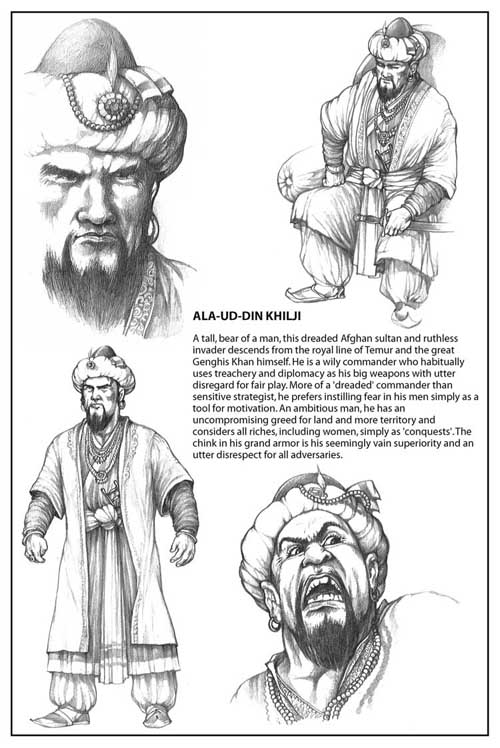
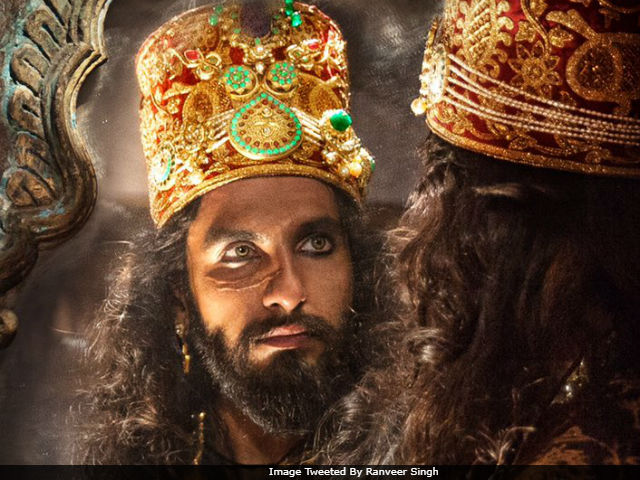
Epic and Counter-Epic in Medieval India, the author mentions that it was Ghiyasuddin Khilji of Malwa and not Alauddin who had taken a fancy to Rani Padmini, a theory which is backed up by the inscription in Udaipur that said that Ghiyasuddin had faced a crushing defeat at the hands of a Rajput chieftain, Badal-Gora in 1488, which happened to also be the name of the twins (Badal and Gora) who helped Rana Ratan Singh escape the besieged fort of Chittor in Jayasi’s Padmavat.
He also stated that Jayasi’s poem was heavily influenced by an earlier source, Nayachandra Suri’s Hammira Mahakavya, which was a biography of the 14th-century Chauhana king Hammira Mahadeva, whose daughter had been propositioned by the real Alauddin Khilji to give in to him, in exchange for the freedom of Chittor which he had annexed. Much like Jayasi’s Rana Ratan Singh didn’t give up Padmavati to Alauddin in his poem, King Hammira Mahadeva did not let his daughter give her hand to Alauddin in defeat.
Ultimately, it all depends on whose version you’re following. As Mukhia says, Jayasi’s poem witnessed many variations through the centuries. According to his records, some Urdu and Persian translations of Jayasi’s work between the 16th and 20th centuries state that Rani Padmini was being courted by Alauddin Khilji.
He also adds that during the same period, Rajput literature instead focused the story around Rani Padmini in terms of her ‘Rajput honour’ that became associated with Rani Padmini’s body and how she would rather burn to death than fall prey to the lecherous hands of the invader.
And finally, in 19th century Bengali literature, Padmavati began to embody the image of a heroic queen committing jauhar in order to save her honour from a lusty Muslim invader. These contained some of the primary mentions of Rani Padmini’s story that took on a communal hue.
These 19th century Bengali works, like Ranglal Bandhopadhyaya’s Padmini Upakhyan (1858), Jyotindranath Tagore’s Sarojini ba Chittor Akraman (1875), Kshiroprasad Vidyavinod’s Padmini (1906) and Abanindranath Tagore’s Rajkahini (1909), all had one thing in common: they all presented the Rajputs as brave sacrificial warriors protecting their women, lands, and importantly, religion, against the lustful ‘Muslim’ aggressor, reports Scroll.
So which version is true? I guess it depends on who you’re asking.
Above Descripation Credits: The Quint
Picture Credits: Google
Author Says: Though THE History SHOULDN'T Be Compromised Anyways BUT IF A Director IS Making A Movie ON IT, THEN People Need TO Understand THAT There WILL Be Some Imaginary Scenes[NOT Adult] IN THE Movie.
Author HAS Copied THE Above Content!