A Brief Description About THE "Padmavati" Controversy Via THE QUINT
A flurry of protests have broken out across the country, mostly by religious right-wing groups, about the screening of Sanjay Leela Bhansali’s upcoming movie Padmavati.The director, cast and crew have all been called out on the premise of the film and there has been ongoing to-and-fro of allegations and counter-allegations of communalism.But amid all the controversy surrounding the film, let’s actually take a look back into history. Who was Rani Padmavati? Did she even exist?




1. Who Was Rani Padmini?
The greatest question to be considered here, is the very existence of the historical figure called Rani Padmini. The first mention of Padmini or Padmavati as she is better known, took place in medieval poet Malik Muhammad Jayasi’s poem ‘Padmavat’ in 1540.
According to Jayasi’s version, Rani Padmini was born at some point between the 13th and 14th century, in Simhal Dvipa, former Sri-Lanka. As the story goes, Padmini was noted for her unparalleled beauty and had caught the eye of many suitors. She also had a talking parrot by the name, Hira-mani, who spoke of Padmini’s beauty at length to Chittor’s Rana Ratan Singh, who then proceeded to travel to Simhal Dvipa and win her hand in the swayamvar.

2. What was her relation with Alauddin Khilji?
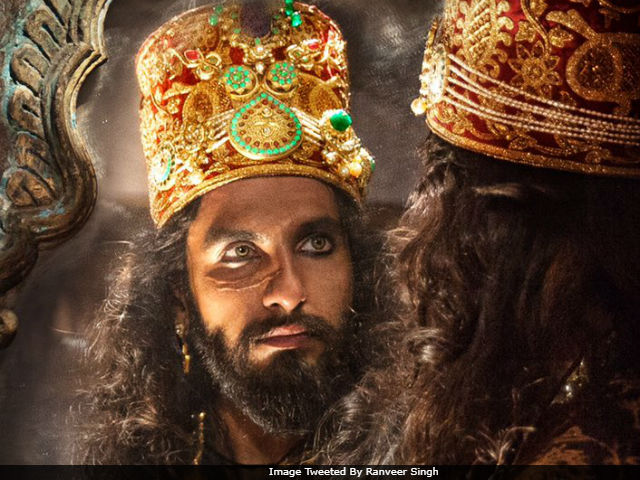
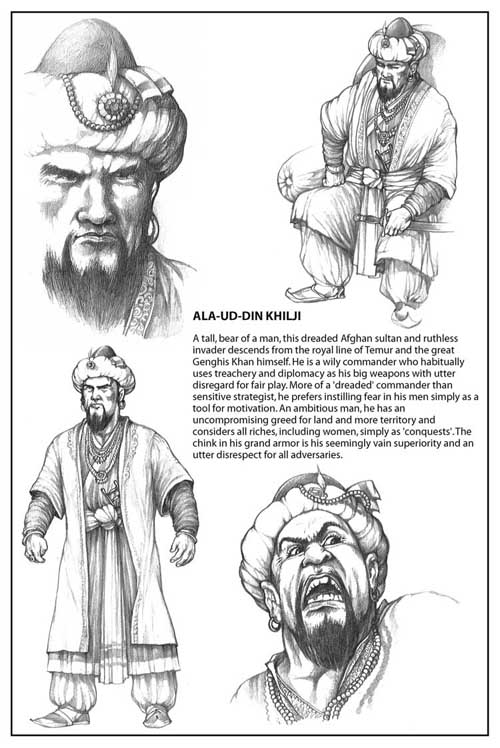
Meanwhile, Delhi had come under the reign of one of the most powerful rulers of the Delhi Sultanate, Alauddin Khilji, the second ruler of the Khilji Dynasty (1290-1320 approx). Historical records state that he was on a ruthless mission to expand his kingdom and that Rajputana was one of his main targets. Alauddin apparently once received a visitor who turned out to be a banished sorcerer from Rana Ratan Singh’s kingdom. In order to avenge his dismissal, he seeded Alauddin with the idea that he must have this beautiful queen of Chittor. Following this, Alauddin set forth for Chittor, entrapped Rana Ratan Singh and told him that the price for his freedom would be his wife.
What followed was that, according to Jayasi and the variations of his work thereof, Rani Padmini made a plan to rescue her husband with the Rajput army, but it failed and the army lost many of its men. Rana Ratan Singh too was killed in the crossfire and by the time an elated Alauddin entered the castle to claim his prize, Padmini and the other women of Chittor had commited jauhar to save their honour.
That was the end of that tragic story.
--------------------------------------------------------
3. But Is That the Real Story? Historians are Unsure
Professor and historian Harbans Mukhia told The Quint that there are many loopholes in Jayasi’s story. Firstly, he says, going by literary sources of that period, Alauddin Khilji had defeated the Rana of Chittor in 1303 and died in 1316. At this point, no one by the name of Padmini or Padmavati existed. He added that the mythical Rani Padmini was noted to have been born sometime about the 1500s, which is a good two hundred-odd years from Alauddin’s timeline.
But then, besides recorded and verifiable historical facts, there is another set of facts too, culturally constructed and embodied in popular memory, told, retold and retold yet again. The Padmavati story too, like many others, has undergone several mutations.
Tasneem Suhrawardy, Professor of Medieval History at St Stephen’s College, Delhi also offered some strong points that poke holes in Jayasi’s Padmavati story. She said that there are no sources through the ‘contemporary literature’ of the period that suggested the existence of any such Rani Padmini. The works of Ziauddin Barani, a writer and thinker who resided in the court of Muhammad Tughlaq and Feroz Shah, and Amir Khusrau, a scholar and musician in Nizamuddin Auliya’s court. are taken by most historians to be the closest to credible sources of information to the history of medieval India.
And in none of their works was there any mention of a woman named Rani Padmini.
She added that the portrayal of Alauddin Khilji in Bhansali’s Padmavati wasn’t quite accurate.
"Alauddin Khilji may have been called ‘harsh’ in history, but he was possibly one of the most able rulers of that period."
According to her, it was under his reign that the Delhi Sultanate finally managed to check the growing threat of the Mongols for the first time. He also implemented several ‘modern’ land-based policies, including rationing. As a result, she said, she finds it hard to believe that a ruler as shrewd and strategic as Alauddin Khilji was made out to be, would lose his head and pledge war over Rani Padmini, whose records don’t even exist in that particular time-frame at least.
4. Which Historical Account to Believe?
According to Scroll, in Aziz Ahmed’s paper Epic and Counter-Epic in Medieval India, the author mentions that it was Ghiyasuddin Khilji of Malwa and not Alauddin who had taken a fancy to Rani Padmini, a theory which is backed up by the inscription in Udaipur that said that Ghiyasuddin had faced a crushing defeat at the hands of a Rajput chieftain, Badal-Gora in 1488, which happened to also be the name of the twins (Badal and Gora) who helped Rana Ratan Singh escape the besieged fort of Chittor in Jayasi’s Padmavat.
He also stated that Jayasi’s poem was heavily influenced by an earlier source, Nayachandra Suri’s Hammira Mahakavya, which was a biography of the 14th-century Chauhana king Hammira Mahadeva, whose daughter had been propositioned by the real Alauddin Khilji to give in to him, in exchange for the freedom of Chittor which he had annexed. Much like Jayasi’s Rana Ratan Singh didn’t give up Padmavati to Alauddin in his poem, King Hammira Mahadeva did not let his daughter give her hand to Alauddin in defeat.
5. So was she fact or fiction?
Ultimately, it all depends on whose version you’re following. As Mukhia says, Jayasi’s poem witnessed many variations through the centuries. According to his records, some Urdu and Persian translations of Jayasi’s work between the 16th and 20th centuries state that Rani Padmini was being courted by Alauddin Khilji.
He also adds that during the same period, Rajput literature instead focused the story around Rani Padmini in terms of her ‘Rajput honour’ that became associated with Rani Padmini’s body and how she would rather burn to death than fall prey to the lecherous hands of the invader.

And finally, in 19th century Bengali literature, Padmavati began to embody the image of a heroic queen committing jauhar in order to save her honour from a lusty Muslim invader. These contained some of the primary mentions of Rani Padmini’s story that took on a communal hue.
These 19th century Bengali works, like Ranglal Bandhopadhyaya’s Padmini Upakhyan (1858), Jyotindranath Tagore’s Sarojini ba Chittor Akraman (1875), Kshiroprasad Vidyavinod’s Padmini (1906) and Abanindranath Tagore’s Rajkahini (1909), all had one thing in common: they all presented the Rajputs as brave sacrificial warriors protecting their women, lands, and importantly, religion, against the lustful ‘Muslim’ aggressor, reports Scroll.
So which version is true? I guess it depends on who you’re asking.
Above Descripation Credits: The Quint
Picture Credits: Google
Author Says: Though THE History SHOULDN'T Be Compromised Anyways BUT IF A Director IS Making A Movie ON IT, THEN People Need TO Understand THAT There WILL Be Some Imaginary Scenes[NOT Adult] IN THE Movie.
Author HAS Copied THE Above Content!